Why do most inventions emerge in large cities? Can artificial intelligence reduce development gaps between cities? And how can sustainable development be achieved while maintaining economic growth and improving social well-being?
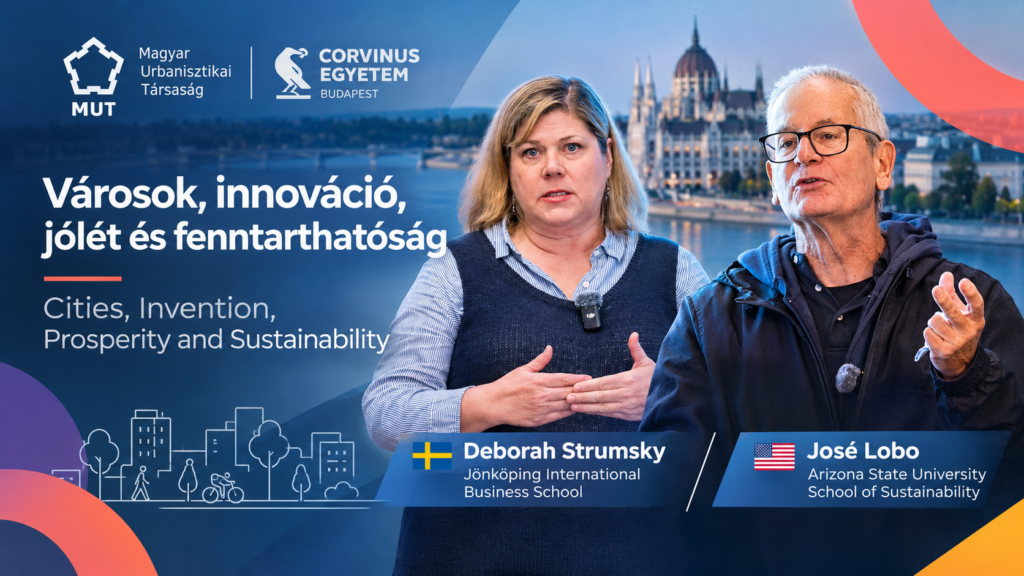
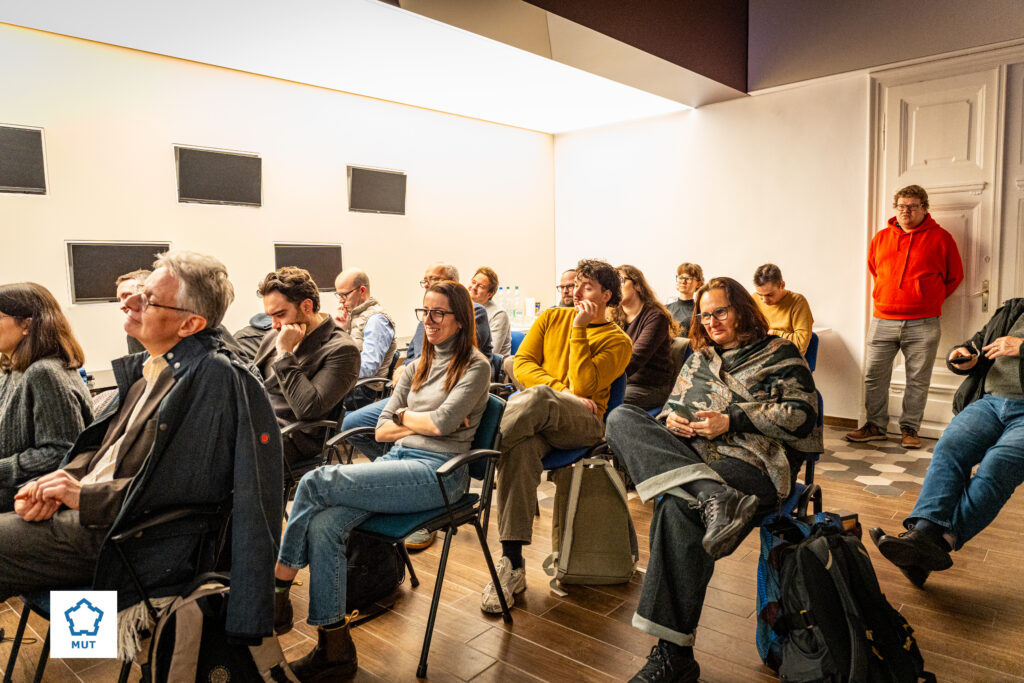
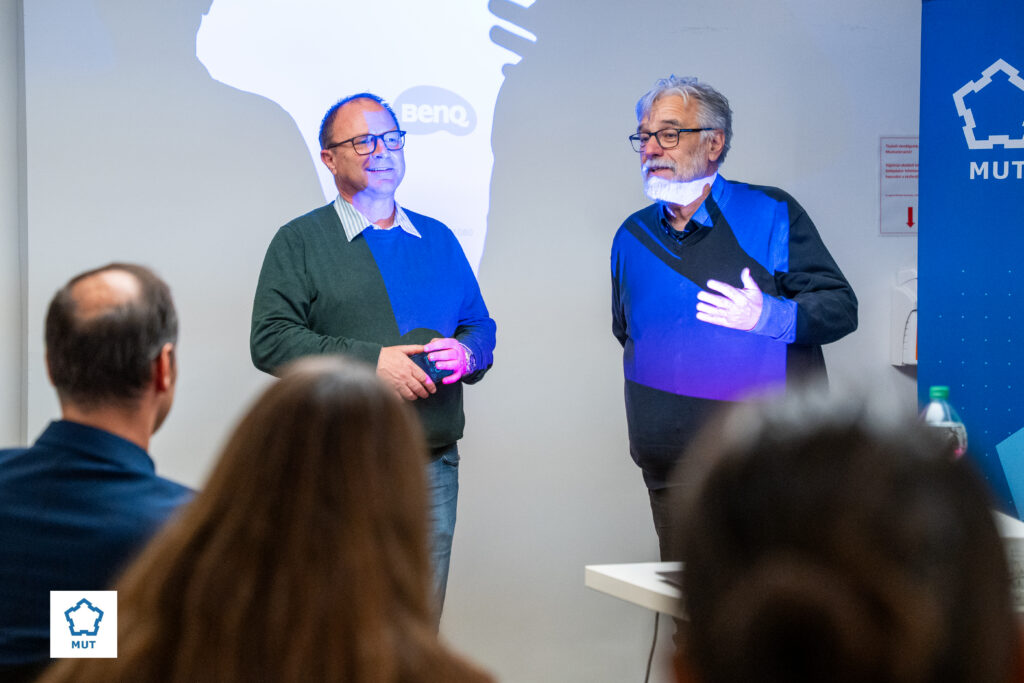
These were among the central questions explored at the professional event entitled Cities, Invention, Prosperity and Sustainability, jointly organised by the Hungarian Society for Urban Planning (MUT) and Corvinus University of Budapest.
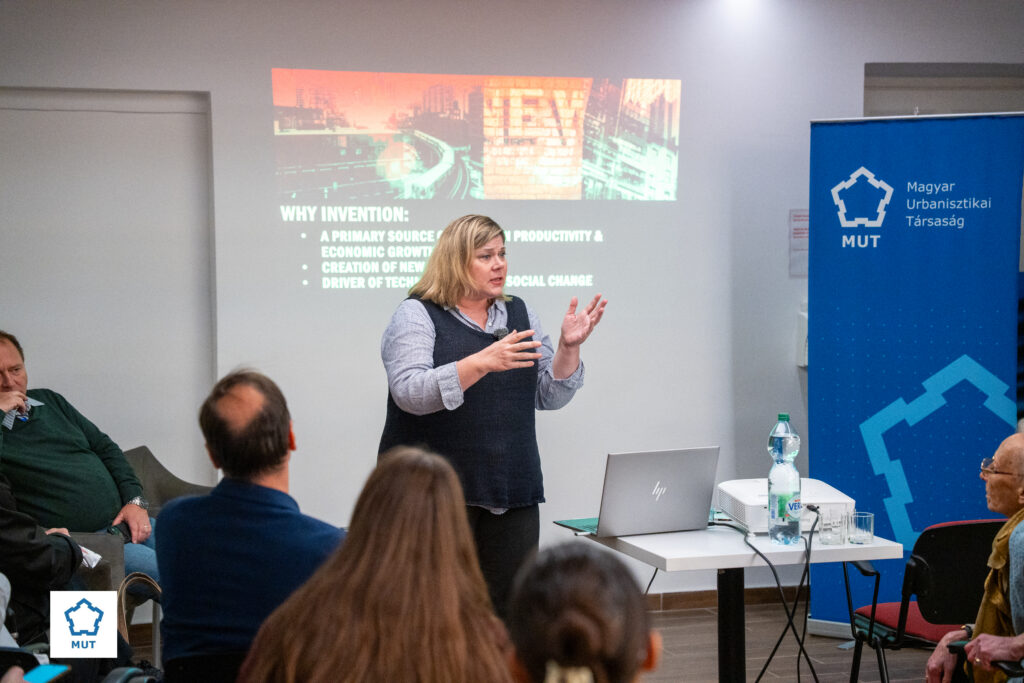
The event featured presentations by two internationally recognised researchers: Deborah Strumsky, Professor of Economics at Jönköping International Business School in Sweden, and José Lobo, Clinical Associate Professor at Arizona State University’s School of Sustainability in the United States.
Approaching the future of cities from different but complementary perspectives, the two speakers examined the relationship between urban development, technological progress, economic prosperity and sustainability. While Deborah Strumsky focused on the geography of invention and the concentration of innovation in cities, José Lobo explored the achievements, contradictions and future challenges of sustainability science.
Why Are Cities the Centres of Innovation?
Deborah Strumsky began her presentation by highlighting the close relationship between technological change and long-term economic growth. Inventions and technological advances increase productivity, create new markets and can fundamentally transform the way societies function.
With the spread of digital communication and remote working, many expected geographical proximity to become less important. In an age of internet connectivity, video conferencing and artificial intelligence, professionals can theoretically collaborate without being located in the same city.
However, the research evidence presented by Strumsky suggests otherwise.
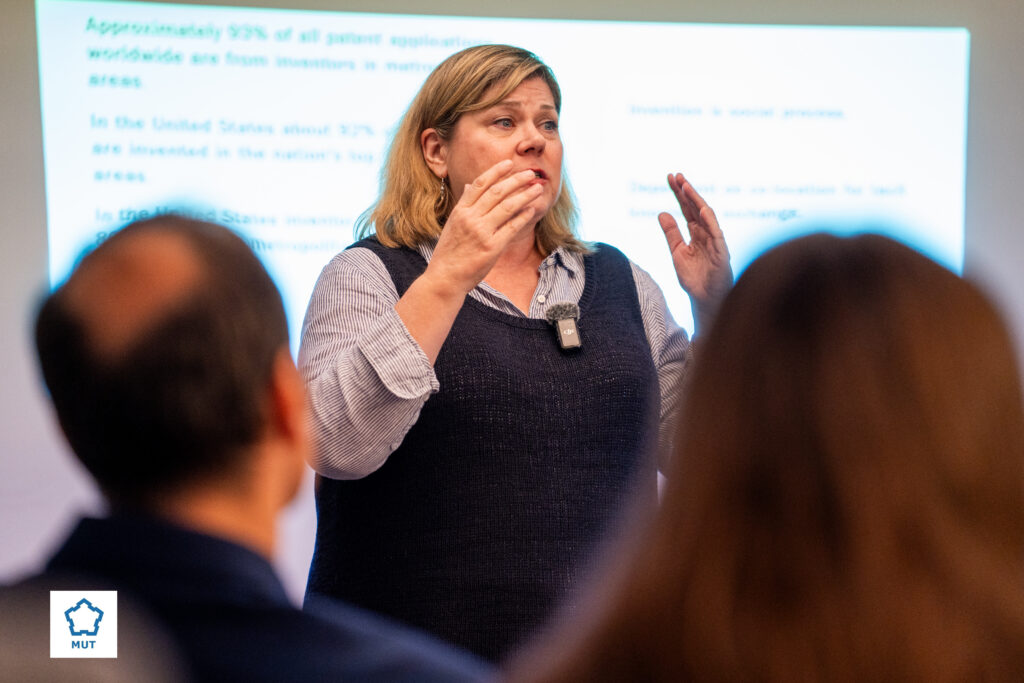
According to the figures discussed in her presentation, approximately 93% of patents worldwide originate in urban areas. In the United States, nearly half of all inventions are concentrated in just ten metropolitan areas.
Rather than becoming less important, cities have strengthened their position as the primary centres of innovation.
Innovation Is a Social Process
Strumsky emphasised that the familiar image of the lone inventor working independently is often misleading. Most significant technological advances result from collaboration, professional networks and interactions between people with different types of knowledge.
The particular advantage of cities lies in their ability to bring together individuals with diverse skills, experiences and expertise.
Research into urban scaling demonstrates that innovation can increase faster than population size. Larger, better-connected cities can therefore generate disproportionately high levels of inventive activity, gaining an advantage not only in total output but also in innovation per capita.
Strumsky also demonstrated the remarkable persistence of urban innovation hierarchies. A comparison of American metropolitan areas in the 1970s and the 2010s revealed a strong correlation between their positions in the innovation rankings.
Cities that were leading centres of invention several decades ago have generally maintained their advantages, while smaller and less innovative cities have found it difficult to move significantly upwards.
These findings highlight the importance of knowledge networks, connectivity and collaboration, particularly for medium-sized cities seeking to strengthen their innovation capacity.
Artificial Intelligence May Further Strengthen Urban Concentration
Artificial intelligence offers new opportunities for generating and applying knowledge. However, current trends suggest that it does not necessarily reduce geographical inequalities.
Strumsky presented evidence showing that the ten leading metropolitan areas in the United States account for approximately 62% of AI-related inventions. This represents an even greater concentration than that observed for patents overall.
The researcher also distinguished between different forms of invention: radical technological breakthroughs, novel combinations of existing technologies, and incremental improvements that make technologies more effective, reliable or accessible.
She placed particular emphasis on combinatorial innovation, in which existing technologies and knowledge from different fields are brought together to create new solutions.
Such innovations frequently depend on collaboration between specialists from different disciplines. This further reinforces the advantages of diverse urban environments, where interdisciplinary cooperation is easier to establish.
At the same time, artificial intelligence could eventually create new opportunities for smaller and medium-sized cities.
Achieving this potential, however, requires more than simply introducing new technological tools. Businesses, universities and other organisations must also rethink their working methods and organisational processes.
Artificial intelligence will not automatically eliminate regional disparities, but its thoughtful integration could open up new opportunities for cities that are currently outside the leading innovation centres.
Sustainable Development: Scientific Achievements and Societal Challenges
José Lobo examined the development of sustainability science over the past two decades, reflecting on both its academic achievements and the challenges it currently faces.
He recalled that the concept of sustainable development gained international prominence through the 1987 Brundtland Report. In the United States, the publication of Our Common Journey by the National Academy of Sciences in 1999 played an important role in establishing sustainability as a distinct field of scientific research.
Since then, universities have established dedicated programmes, departments and research institutions, while scientific journals and professional organisations have contributed to the rapid development of the discipline.
From an institutional and academic perspective, sustainability science has achieved considerable success in a relatively short period.
According to Lobo, however, this progress reveals a fundamental contradiction.
While the volume and recognition of sustainability research have increased significantly, it remains much more difficult to demonstrate that scientific findings have substantially transformed the everyday practices of businesses, local governments and society.
The original ambition of sustainability science was not simply to understand the world, but also to help societies move towards a more sustainable future.
Can Sustainability and Economic Growth Coexist?
One of the central themes of Lobo’s presentation was the relationship between economic development and environmental sustainability.
He argued that sustainability is increasingly perceived by some as a call to limit economic growth. This interpretation can generate considerable social and political resistance, particularly in regions where economic development remains essential for improving living standards.
Lobo stressed that the concept of sustainable development must not lose sight of development itself.
While reducing consumption may be a realistic subject of public debate in some wealthier countries, economic growth, employment opportunities and poverty reduction remain urgent priorities in many cities across the developing world.
Sustainability goals must therefore be formulated in ways that are compatible with economic progress and improvements in social well-being.
The challenge is not simply to choose between economic growth and environmental protection, but to identify solutions that can advance both objectives.
The Energy Transition Is Also a Social and Infrastructure Challenge
Using the transformation of the American energy market as an example, José Lobo illustrated how technological developments can produce unexpected consequences.
The widespread adoption of hydraulic fracturing, commonly known as fracking, significantly increased access to oil and natural gas resources in the United States.
This development challenged earlier expectations that fossil fuel supplies would gradually become more limited, thereby complicating the transition towards a low-carbon economy.
Lobo also emphasised that decarbonising urban energy systems cannot be achieved solely through the introduction of new renewable energy technologies.
The transformation and modernisation of electricity grids require major investments and raise complex questions about financing, infrastructure and social responsibility.
Equally important are the social consequences of the sustainability transition.
Environmental policies do not necessarily benefit all groups equally. For example, measures designed to reduce dependence on fossil fuels may threaten the livelihoods of workers and communities whose economic security depends on their extraction.
A successful transition must therefore consider how its costs and benefits are distributed across society and how those negatively affected can be supported.
Similar challenges arise for businesses and households, which need realistic and economically viable pathways towards more sustainable practices.
The Future of Sustainable Development Will Be Shaped in Cities
Towards the end of his presentation, José Lobo returned to the central role of cities.
As the majority of the world’s population now lives in urban areas, the implementation of sustainability goals and adaptation to climate change will largely take place within cities and metropolitan regions.
According to Lobo, one of the most important tasks for researchers and policymakers is to identify approaches that simultaneously support economic development, environmental sustainability and climate adaptation.
Artificial intelligence may contribute to addressing these challenges, although its potential benefits and wider implications require further investigation.
Lobo concluded by emphasising the importance of international scientific cooperation.
He specifically invited Hungarian researchers, urban planners and practitioners to participate in the ongoing international discussion about the future of sustainability science.
Addressing these complex challenges cannot be the responsibility of a single country or academic discipline. It requires broad cooperation between researchers, policymakers, businesses and communities.
Innovation and Sustainability: Shared Challenges for the Future of Cities
The two presentations highlighted the central role of cities in both technological development and the transition towards sustainability.
Deborah Strumsky demonstrated that urban concentration, personal interactions and collaboration between different fields of expertise remain essential drivers of innovation.
José Lobo, meanwhile, emphasised that scientific and technological progress alone is insufficient to achieve sustainable development.
Meaningful change also requires institutional adaptation, social cooperation, appropriate infrastructure and careful consideration of economic consequences.
These questions are equally relevant to Hungarian cities.
Strengthening the innovation capacity of small and medium-sized cities, transforming urban infrastructure sustainably, and balancing economic development with environmental objectives are among the major challenges facing urban planning and development in Hungary.
The joint event organised by the Hungarian Society for Urban Planning and Corvinus University of Budapest provided another valuable opportunity to bring international research findings and current scientific debates into the Hungarian urban planning community.
The full presentations will be available on the Hungarian Society for Urban Planning’s YouTube channel.
José Lobo – Sustainability and Urban Prosperity
Deborah Strumsky – Innovation in Cities